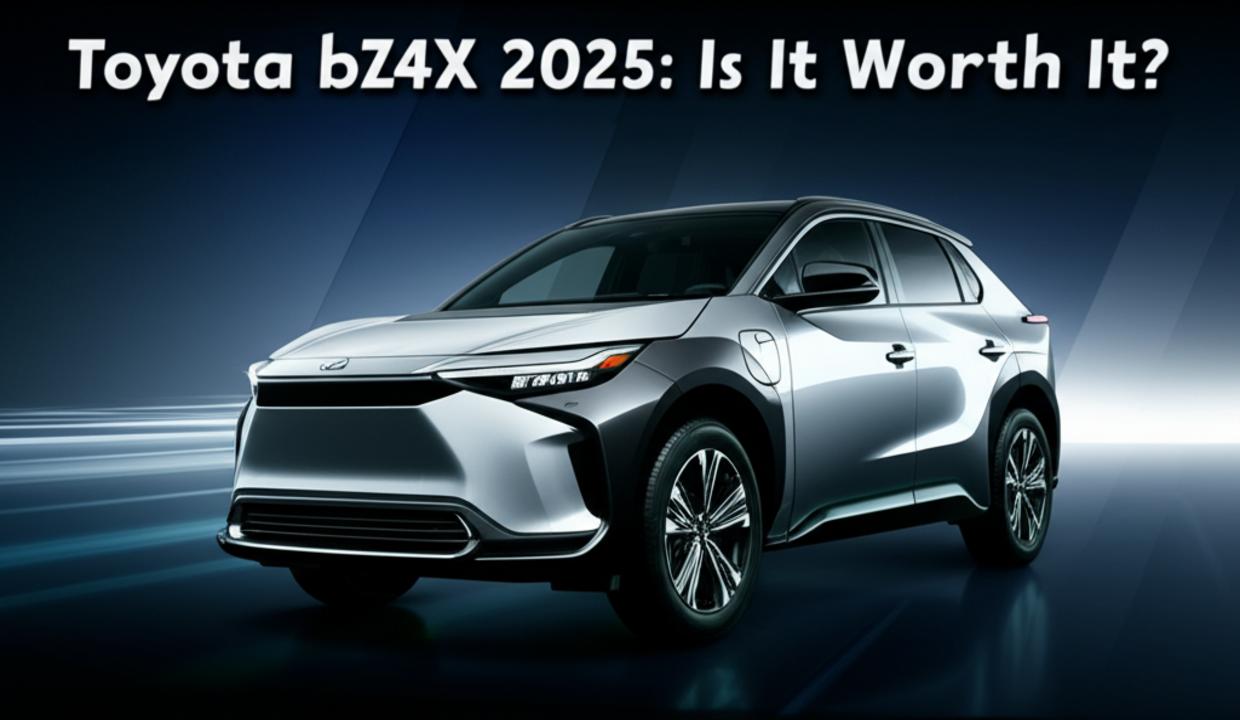
Welcome to our in-depth look at the 2025 Toyota bZ4X review! If you are considering making the switch to an electric vehicle, or simply curious about Toyota’s electric SUV offering, you’ve landed in the right place. The 2025 bZ4X aims to blend Toyota’s renowned reliability with modern EV technology.
But does it truly hit the mark in a rapidly evolving market? In this comprehensive article, we will dissect every aspect of the 2025 bZ4X, from its performance and charging capabilities to its design, comfort, and market positioning. We’ll help you decide if this EV review makes the bZ4X worth your investment.
Main Highlights: 2025 Toyota bZ4X Review
The 2025 Toyota bZ4X stands as a compact all-electric SUV, marking Toyota’s significant push into the EV segment. It comes with options for a single front motor (front-wheel drive) or dual motors (all-wheel drive), offering instant electric power.
This setup ensures smooth and quiet acceleration, typical of electric vehicles. However, it’s important to note that while competent, the bZ4X faces stiff competition, particularly concerning its range and charging speed compared to segment leaders.
Performance and Key Features
The 2025 Toyota bZ4X delivers a respectable driving experience, especially in urban environments. Its electric powertrain ensures smooth, near-silent acceleration, making city commutes highly enjoyable. You’ll find that it provides peppy performance, capable of easily navigating stop-and-go traffic.
When it comes to speed, the bZ4X performance allows it to accelerate from 0 to 60 mph in approximately 6.4 seconds. While this is certainly adequate for most drivers, it’s worth noting that several key rivals in the electric SUV market, such as the Hyundai Ioniq 5, Kia EV6, and Ford Mustang Mach-E, offer quicker acceleration figures.
The vehicle’s working principle relies on electric motors providing instant torque. The single front motor configuration powers the front-wheel-drive (FWD) model, while dual motors enable the all-wheel-drive (AWD) variant. This choice gives buyers flexibility depending on their driving needs, whether prioritizing efficiency or enhanced traction.
Inside, the bZ4X offers a cabin designed for five passengers, featuring familiar Toyota controls that are intuitive to use. The ride quality is generally smooth, contributing to a pleasant driving experience. However, prospective buyers should be aware that it might lack some of the more advanced driver-assistance and innovative features found in some direct competitors.
Driving Range and Charging Capabilities
One of the most critical aspects of any EV review is its driving range and charging infrastructure. For the 2025 Toyota bZ4X, the EPA-estimated range is up to 252 miles for the FWD model and 222 miles for the AWD version. These figures, while decent, are not class-leading in the current market.
It’s crucial to consider real-world driving conditions, especially on highways, where EV range often decreases. Tests have shown that the bZ4X typically achieves between 160-210 miles under highway conditions, which can be a significant limitation for longer journeys. This range performance is generally considered below average for its segment.
When it comes to charging, the 2025 bZ4X has some notable limitations. It features a modest 6.6-kW onboard Level 2 charger. This means that home charging can take longer than desired, especially if you’re looking for a quick turnaround. For a full charge at Level 2, you might be waiting for several hours.
The DC fast-charging rate is also a point of concern. The bZ4X supports a maximum DC fast-charging rate of only 100 kW. Many competitors, by contrast, offer charging speeds of 170 kW or more, some even exceeding 200 kW. This slower fast-charging capability can significantly impact convenience and travel time on longer trips, making quick top-ups less efficient. For more details on range performance, you can check out this article from Car and Driver’s expert review of the Toyota bZ4X.
Design, Interior, and Comfort
The exterior styling of the 2025 Toyota bZ4X presents a modern and sleek aesthetic. It features a coupe-like roofline, which gives it a dynamic and contemporary look. Large wheels contribute to its assertive stance on the road, while prominent plastic cladding adds a rugged, practical element, hinting at its SUV capabilities.
Stepping inside, the interior quality is primarily functional. However, some aspects reveal the use of cheaper plastics, which might be a minor letdown for those expecting a more premium feel at its price point. The cockpit layout is somewhat quirky, featuring a small steering wheel that takes some getting used to.
A notable design choice is the placement of the instrument cluster, which can be hard to see for some drivers due to its position above the small steering wheel. This design might require drivers to adjust their seating or steering wheel position significantly to get a clear view.
Despite these quirks, the cabin is spacious enough for five passengers. Rear seat comfort, however, has been noted as less than ideal by some reviewers and consumers. This could be a consideration for families or those frequently transporting adults in the back. You can find more insights from consumer reviews on Edmunds regarding the interior comfort.
Technology and Safety
The 2025 Toyota bZ4X incorporates familiar Toyota controls throughout its cabin, which contributes to an intuitive user experience for anyone accustomed to the brand. This ease of use ensures a minimal learning curve, allowing drivers to quickly feel at home behind the wheel.
While the bZ4X offers a solid foundation of essential features, it does not push the boundaries with cutting-edge advanced driver-assistance systems (ADAS) or innovative driving features that some of its competitors boast. Toyota’s commitment to safety is evident, but the vehicle might lack some of the more elaborate semi-autonomous driving aids found in rivals.
The infotainment system is user-friendly, providing connectivity and navigation. However, it generally sticks to a practical rather than overtly luxurious approach. This might suit buyers who prefer straightforward functionality over a multitude of complex technological gadgets. The overall technological package aims for reliability and ease of use, aligning with Toyota’s brand philosophy.
What’s New in 2025?
The 2025 Toyota bZ4X largely carries over the characteristics of its predecessor, indicating that Toyota is refining its existing platform rather than introducing significant overhauls. This means that the core attributes, including its driving dynamics, interior layout, and electric powertrain options, remain consistent.
Updates for 2025 focus on maintaining its competitive stance as a value-oriented EV SUV. While no revolutionary changes are highlighted, the focus remains on delivering a competent electric vehicle experience. Prospective buyers should anticipate minor refinements rather than a completely reimagined model.
The 2025 model continues to be positioned as a suitable choice for city driving or as a supplementary family vehicle, particularly for those prioritizing a smooth ride and the trusted Toyota brand. Its pricing structure also helps reinforce its market niche, making it an accessible option in the EV landscape. To learn more about the latest model year, check out this 2025 Toyota bZ4X review.
Pricing and Market Positioning
The 2025 Toyota bZ4X is positioned as a value-oriented electric SUV within the competitive EV market. Pricing for the bZ4X starts at around $37,000 for the base model, making it an attractive entry point for those looking to get into an electric vehicle without breaking the bank. A fully equipped model can reach approximately $66,000, reflecting various trim levels and optional features.
This pricing structure places the bZ4X in direct competition with other compact electric SUVs. While it offers a strong value proposition, particularly with potentially attractive lease deals, it does come with some drawbacks, as highlighted earlier. Its limited driving range and interior refinement, which features more functional than luxurious materials, are key considerations.
The ideal buyer for the 2025 bZ4X is likely someone seeking a reliable Toyota electric SUV primarily for urban commutes or as a second family vehicle. It may not be the primary choice for buyers needing a long-range EV for frequent road trips, but for daily city driving and short to medium distance travel, it certainly holds its own. The market positioning makes it a competent, albeit not class-leading, option for those prioritizing budget and brand familiarity.
Pros and Cons
| Pros | Cons |
|---|---|
| Smooth and quiet ride quality | Limited real-world driving range |
| Peppy acceleration for city driving | Slower DC fast-charging capabilities (100 kW max) |
| Familiar Toyota controls and reliability | Noticeable road and wind noise at speed |
| Competitive starting price and lease deals | Interior material quality below segment expectations |
| Spacious cabin for five passengers | Quirky cockpit layout; instrument cluster can be hard to see |
| Respectable 0-60 mph time for daily use | Lacks some advanced driver-assistance features of rivals |
Competitive Analysis
The 2025 Toyota bZ4X enters a highly competitive electric SUV segment, facing formidable rivals such as the Hyundai Ioniq 5, Kia EV6, and Ford Mustang Mach-E. While the bZ4X offers a compelling package, especially with Toyota’s reputation for reliability, it does show some limitations when stacked against these competitors.
In terms of performance, the bZ4X’s 0-60 mph time of 6.4 seconds is respectable. However, rivals like the Hyundai Ioniq 5 and Kia EV6 often achieve this sprint in under 6 seconds, and the more performance-oriented Mustang Mach-E can do it much quicker in its GT trims. This places the bZ4X as competent but not thrilling in acceleration.
Range is another key differentiator. While the bZ4X’s EPA-estimated 252 miles (FWD) is adequate, the Ioniq 5 and EV6 both offer configurations that surpass 300 miles of range. The Mach-E also has long-range options that exceed the bZ4X. This gap becomes more pronounced in real-world highway driving, where the bZ4X’s 160-210 mile highway range can feel notably restrictive compared to its peers.
Charging speed is perhaps the bZ4X’s most significant competitive disadvantage. Its maximum DC fast-charging rate of 100 kW pales in comparison to the Ioniq 5 and EV6, which boast 800-volt architectures capable of charging at over 230 kW, significantly reducing charging times on long trips. Even the Mach-E typically offers faster charging than the bZ4X.
Interior quality and features also vary. While the bZ4X offers a spacious cabin, some reviewers note its use of cheaper plastics and a quirky instrument cluster. Competitors like the Ioniq 5 and EV6 are often praised for their more futuristic and upscale interior designs and higher quality materials, along with more advanced tech features and driver aids. The bZ4X is strong in its foundational safety features but may not offer the same level of cutting-edge innovation as some rivals.
Overall, the 2025 Toyota bZ4X performs well enough, especially with its good handling. However, its range limitations mean it’s often better suited for city use or as a family’s second vehicle. Road and wind noise levels are also higher than desirable compared to many premium EV options. Pricing is competitive, particularly with attractive lease deals, positioning it as a decent, albeit not leading, EV SUV option in a crowded market. #ElectricVehicle
Expert Opinions
According to a summary of a recent YouTube review from April 2025, the 2025 bZ4X offers adequate performance with commendable handling and acceptable acceleration for daily driving. This aligns with its positioning as a practical rather than high-performance EV.
The review also reinforces the observation that range limitations make the bZ4X best suited for city use or as a secondary family vehicle, rather than a primary long-distance traveler. Concerns about road and wind noise levels being higher than desirable were also echoed, suggesting this remains a consistent characteristic of the model.
Despite these points, the competitive pricing of the bZ4X, especially with attractive lease deals, was highlighted as a positive. Overall, the expert opinion suggests that the 2025 Toyota bZ4X is a competent but not class-leading option in the electric SUV segment. It fits well for buyers who prioritize a smooth ride and the reliability associated with the Toyota brand over cutting-edge features or maximum range. For more detailed insights, you can review reports from Consumer Reports on the 2025 bZ4X.
FAQ
- What is the real-world driving range of the 2025 Toyota bZ4X?
The 2025 Toyota bZ4X has an EPA-estimated range of up to 252 miles (FWD) and 222 miles (AWD). However, real-world highway driving can reduce this significantly, often seeing ranges between 160-210 miles, which is below average for its class.
- How fast does the 2025 bZ4X charge?
The bZ4X features a 6.6-kW Level 2 onboard charger and a maximum DC fast-charging rate of 100 kW. This is slower than many competitors that support 170 kW or more, impacting convenience on longer trips and requiring more time for public fast charges.
- Is the 2025 Toyota bZ4X suitable for long road trips?
Due to its limited real-world highway range (around 160-210 miles) and slower DC fast-charging capabilities, the 2025 bZ4X is generally less suited for frequent long road trips compared to rivals. It performs better as a city commuter or secondary vehicle.
- What are the main drawbacks of the 2025 bZ4X?
Key drawbacks include its limited driving range, slower charging speeds, noticeable road and wind noise, and interior material quality that some find to be below expectations for its price point. The quirky cockpit layout can also be a point of adjustment.
Conclusion
In conclusion, the 2025 Toyota bZ4X presents itself as a competent, value-oriented electric SUV from a trusted brand. It offers a smooth ride, quiet operation, and peppy acceleration for city driving, making it an appealing option for daily commutes or as a second family vehicle.
However, it faces strong competition and has some notable limitations, particularly concerning its real-world driving range and slower charging capabilities. The interior, while functional, might not meet the premium expectations set by some rivals, and road noise can be an issue at higher speeds. Ultimately, the bZ4X is best suited for buyers prioritizing Toyota’s reliability and a budget-friendly entry into the EV market, especially if their typical driving involves shorter distances. It’s a decent choice, but perhaps not the groundbreaking Toyota electric SUV some might hope for.
We hope this detailed 2025 Toyota bZ4X review has been helpful in your research! Feel free to share your thoughts in the comments below, or learn more about us and explore other articles on our site. You can also contact us for any questions.
Watch More in This Video
Disclaimer: All images and videos are sourced from public platforms like Google and YouTube. If any content belongs to you and you want credit or removal, please inform us via our contact page.